This summer we conducted another round of eco- and bio-acoustic monitoring in conjunction with the University of Sussex. This involves setting up audio recorders timed to record for one minute out of every five. The recordings are then run through a computer which can identify bird (or bat) calls and give you an idea of what species are using a site. A certain number are also selected for human verification to make sure the software is getting it right. Similarly if there is anything unusual someone can go back and listen and check it is correct. It's not perfect, it misses some species and it is obviously skewed towards birds that make a lot of noise, but it’s a really good way of finding our what is present or passing through our sites, and it flags quite a number of species we have not actually seen or heard in person.
This is the second time we have done this monitoring. Three years ago we did a round at Athelney and a couple of the smaller sites, and this year we were able to do Athelney, the smaller sites at Waste Drove and East Waste and the new Clark Fields site. The results are not quite like-for-like as we had to use different numbers of recorders, but we should be able return to these over the years and build up some useful information.
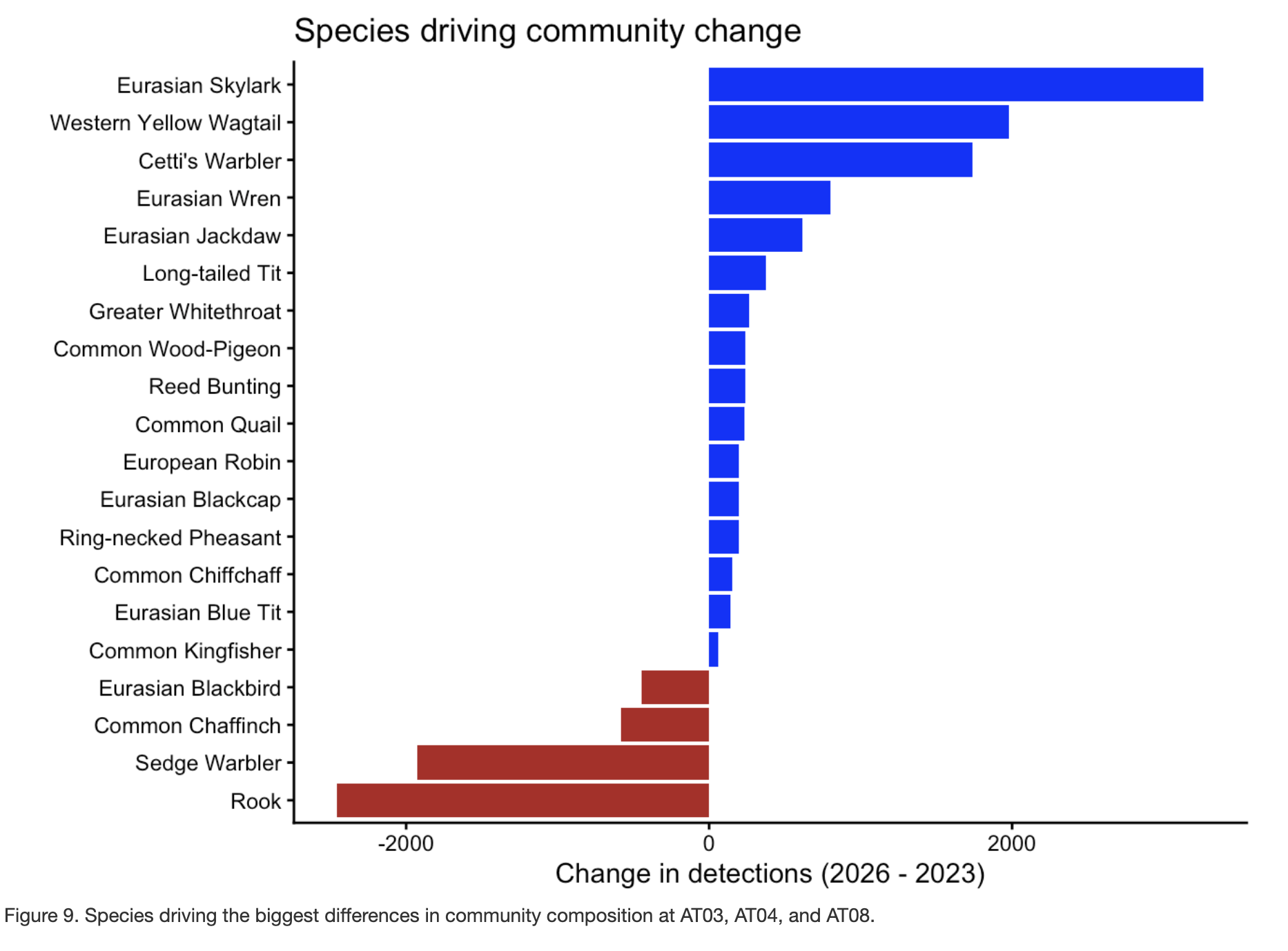
Anyway - you can read the interim report here with the full species mix, but this is one of the graphs from it which shows the change in species mix from a number of the locations at Athelney where we could compare like for like. It's not the whole picture - for example we still have a LOT of sedge warblers at Athelney, but they have probably moved around, or been outsung by the skylarks. Nor does this show all the new species which have come along in the last 3 years (you can see those in the tables in the full report - 62 species at Athelney in 2026 on fewer recorders versus 53 in 2023), but it's still interesting.
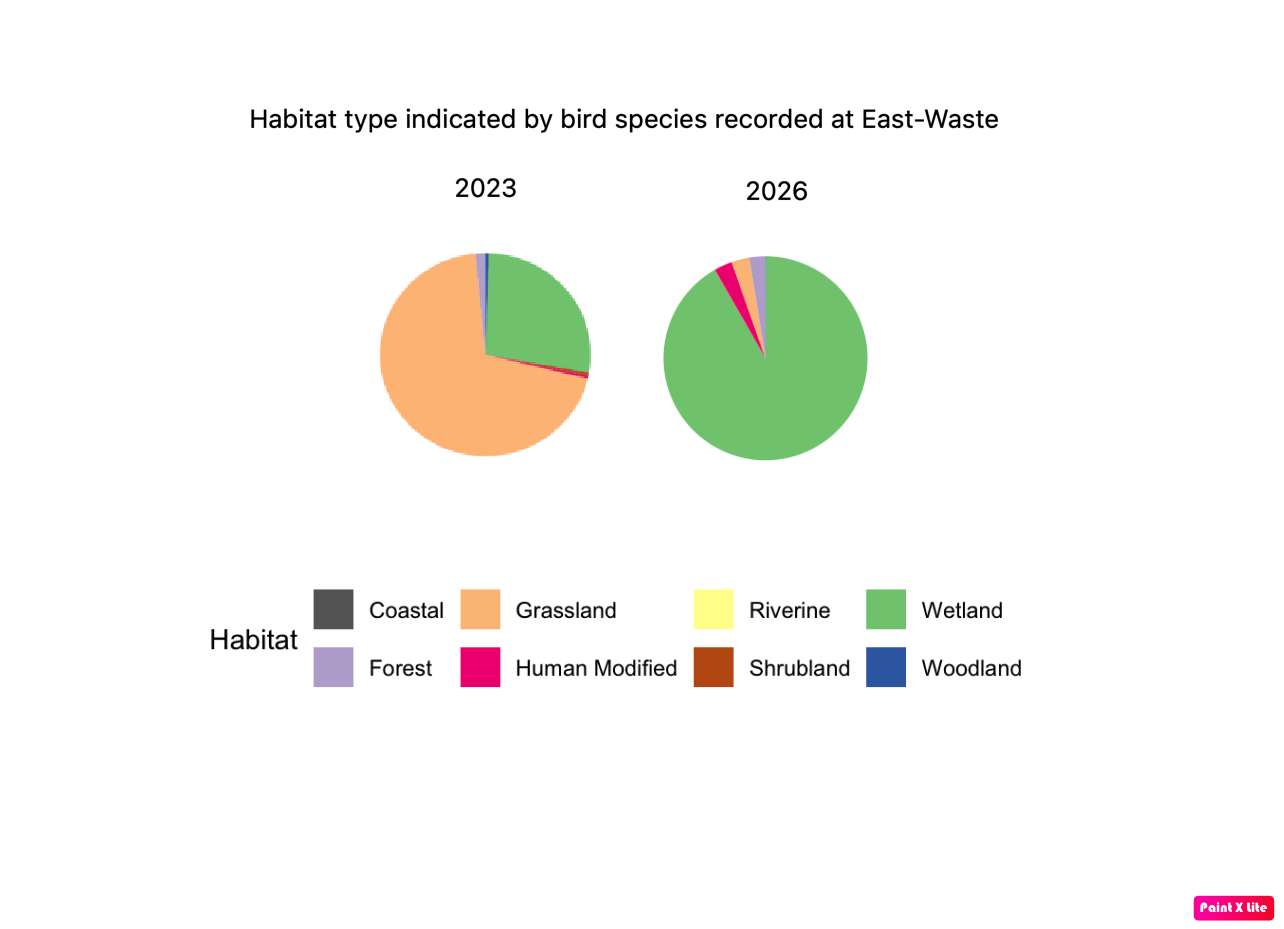
There were also interesting results from one of the smaller locations at East-Waste which began rewilding in early 2022, showing that since our last survey there in 2023 there are now more curlew, reed warbler, barn owl, reed bunting, quail, plover, bullfinch and yellow wagtail, and fewer skylark and sedge warbler (though they are still there).
Alongside the species identification, the eco-acoustic element is working to see if there are correlations about the bioligical richness of a places which can be determined from the structure of the sound - the volume, variation from background, density of frequencies occupied etc. It is still experimental in some ways but we are gathering data to see if it will provide useful information in the future.
It can also tell you something about the characteristics of the species on site - for example the change in characterisation from 2023 to 2026 at the East Waste site (see below), showing how the land has moved from grassland to wetland species in just 3 years.
Anyway, that will do for now, but it something we will be returning to in future years, along with manual surveys and other kinds of monitoring work.