
A message of hope
Ecologist Simon Breeze writes about his experiences conducting baseline invertebrate surveys across a range of our sites.
The buzz of regeneration: what the 2025 invertebrate surveys are telling us
Last year Somerset Wildlands commissioned Breeze Wilder to carry out terrestrial invertebrate surveys across five of its sites. The aim was simple: to establish a clear baseline and begin to understand what happens as rewilding starts to take hold. Set against the wider Somerset Levels and Moors - where much of the landscape is still shaped by intensive farming - these sites may be small but they matter. Together, they offer a glimpse of how wildlife responds as land shifts from intensively managed pasture and arable towards something wetter, messier and far more diverse.
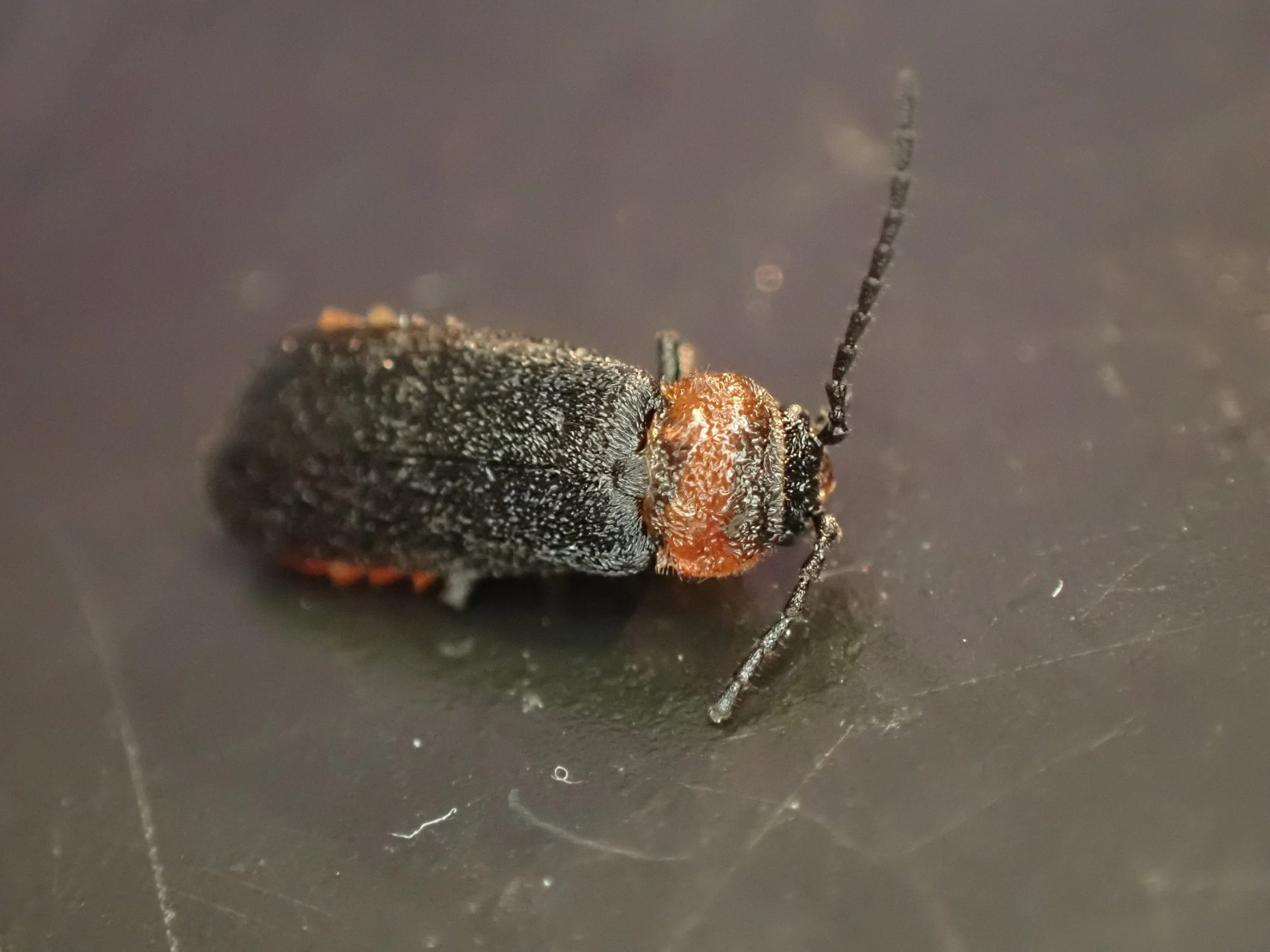
Cantharis fusca (Image: Simon Breeze).
Why invertebrates matter
Invertebrates can tell us a lot about how a place is changing. They pollinate plants, feed birds, mammals and other wildlife, control pests and often respond quickly when habitats become richer, wetter or more varied. So by looking closely at insects and other invertebrates, we get an early sense of how rewilding is beginning to reshape the land. One of the tools used here is the Pantheon Species Quality Index (SQI), which helps show how many habitat-specialist or ecologically significant invertebrates a site supports. In simple terms, it gives us a way of looking beyond total species numbers and asks what kind of species and habitat niches are present. That makes it especially useful for tracking habitat quality and comparing how sites change over time.
Clark Fields (rewilding since March 2025)
As the newest site in the survey, Clark Fields shows the very start of the journey. The 2025 survey recorded 93 species-level entries and a Pantheon Species Quality Index (SQI) of 100, giving an encouraging early snapshot of what could develop here as flower-rich grassland and wetter habitats begin to emerge. Species of interest recorded included Cantharis fusca, a nationally scarce solider beetle associated with tall grassland, meadow edges and ditch-side vegetation.
Athelney (rewilding since September 2022)
Athelney is a little further along, and that is starting to show. The surveys suggest a landscape with more structure and variety, where flowers, scrub edges and wetter vegetation are opening up opportunities for a broader range of insects. Its SQI score points to a site that is already moving away from a more simplified state. During searches on one sunny day in June latticed heath (Chiasmia clathrate), a day flying moth, fluttered and basked in good numbers all around the surrounding tussocky grassland.
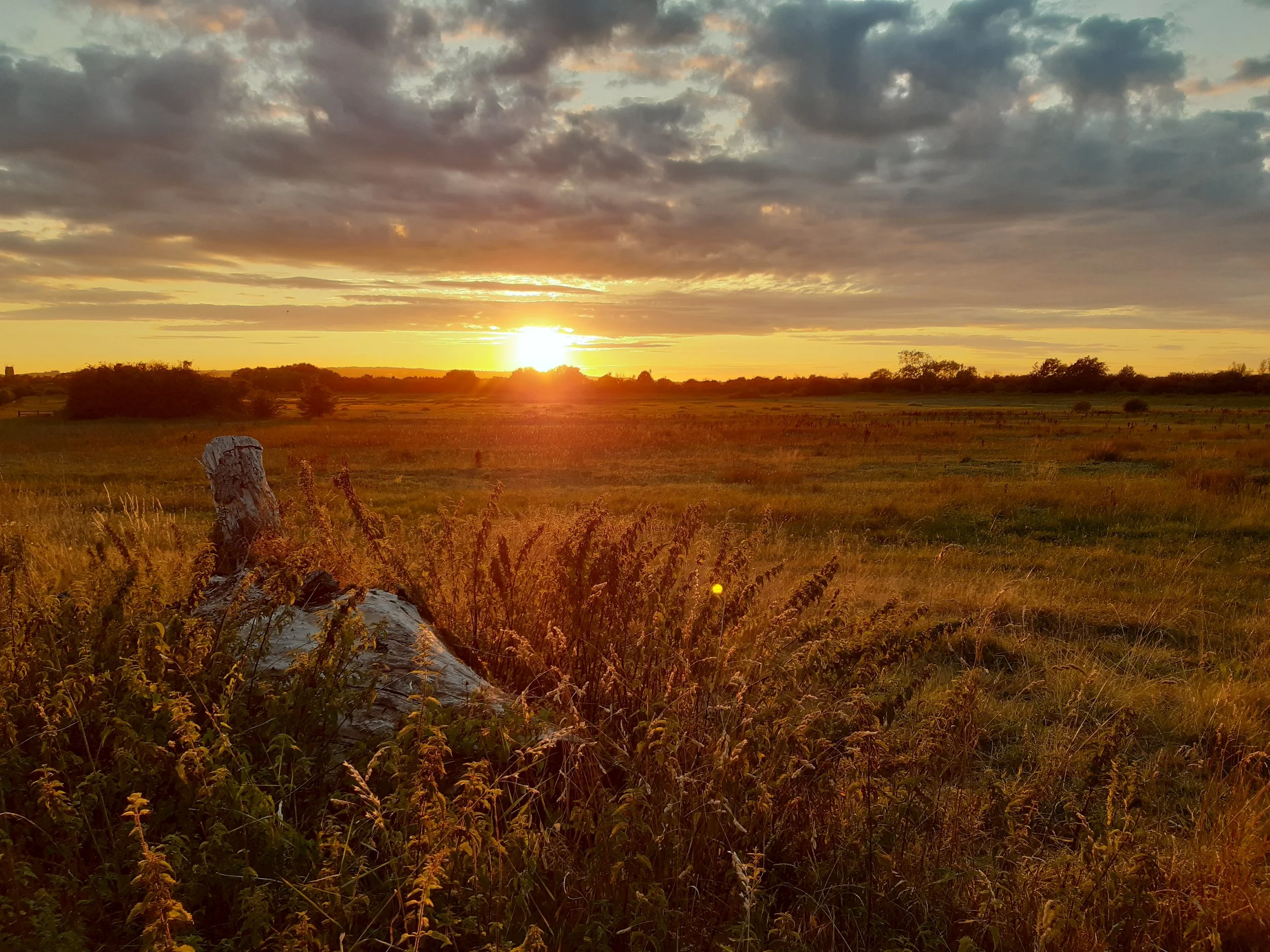
Athelney at dawn. (Image: Simon Breeze).
Godney Marhses: Waste Drove and East Waste (rewilding since 2016 and 2022)
These neighbouring sites show what even a few years of passive regeneration can do. East Waste at the time of survey was developing a more varied mix of short grass, taller vegetation and wetter patches, while Waste Drove is the furthest along in this sequence, and it feels like it. After nearly a decade of low intervention, the site now supports dense wetland vegetation and a much more complex habitat mosaic. The 2025 survey recorded 77 species across 15 orders, giving us a glimpse of what longer-term recovery can look like when natural processes are given time and space. At Waste Drove the scarce and locally distributed bullrush veneer moth (Calamatropha paludella) was found close to its larval foodplant; whilst on another sunny day in June the ‘bombing’ quartering flight of hairy dragonfly (Brachytron pratense) drew my attention at East Waste.
Whites Drove (rewilding since 2017)
This site really stood out for its specialised reed fen and pools assemblage, with an exceptional SQI of 400 (possibly influenced too by its closeness to Westhay Nature reserve). It is a strong reminder of how valuable recovering wetland habitat can be. During a moth trapping session, which seemed to coincide with the emergence of thousands of the long-horned caddisfly Leptocerus tineiformis, swamping the traps, a large thud drew my attention. On closer inspection I discovered a great silver water beetle (Hydrophilus piceus), had also been attracted to the bright light. With its impressive 5cm body length, this nationally scarce species is found in freshwater habitats and needs clean, well-oxygenated water to thrive – as such, it seems to favour the good quality habitat across the Avalon Marshes, including Whites Drove!
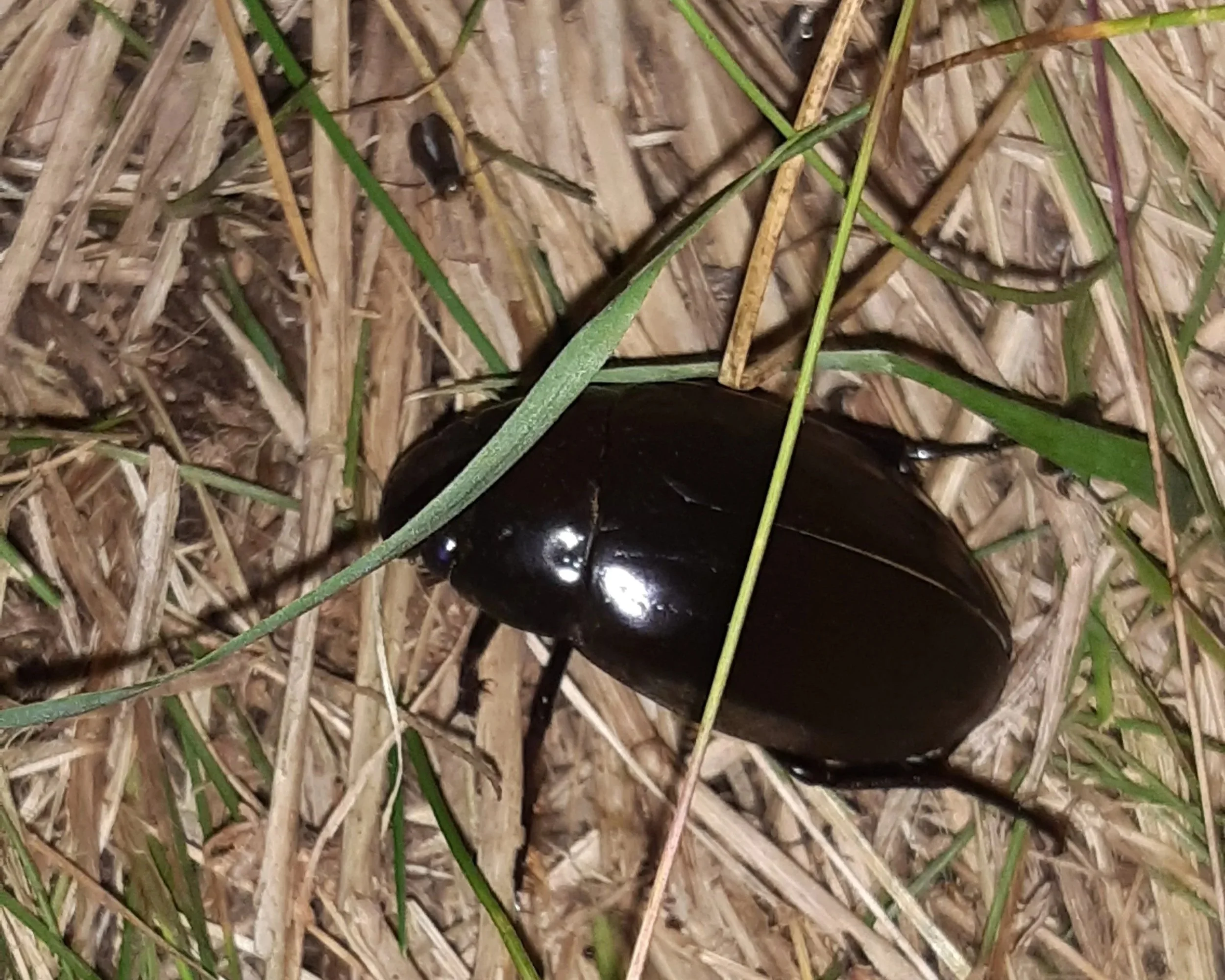
Great silver water beetle. (Image: Simon Breeze)
Discovering Clark Fields - Baseline Ecological Surveys:
Because Clark Fields is right at the beginning of its rewilding story, I also carried out a wider set of baseline surveys, alongside the invertebrate work.
The 2025 UKHab survey showed that much of the site is still improved or modified grassland, but it also picked up important variety across the fields, including species-richer grassland, floodplain grazing marsh and ecologically valuable ditches. One particularly encouraging find was water violet (Hottonia palustris) in the Old Rhyne, which underlines just how important these wet features already are.
Water vole surveys in 2025 also confirmed active use of the Old Rhyne, with a water vole greeting me at its burrow entrance, plus plenty of signs including swim channels, dropping and growing number of burrows. That gives a really useful starting point for tracking how this sadly nationally declining species responds as the bank side habitat develops over time.
Harvest mouse surveys, supported by Somerset Wildlands volunteers, added a lovely community element to this baseline work. A volunteer survey session recorded two harvest mouse nests in suitable grassy habitat, along with several field vole nests across the site. Altogether, it paints Clark Fields as a place with both current ecological value and real promise for the future.
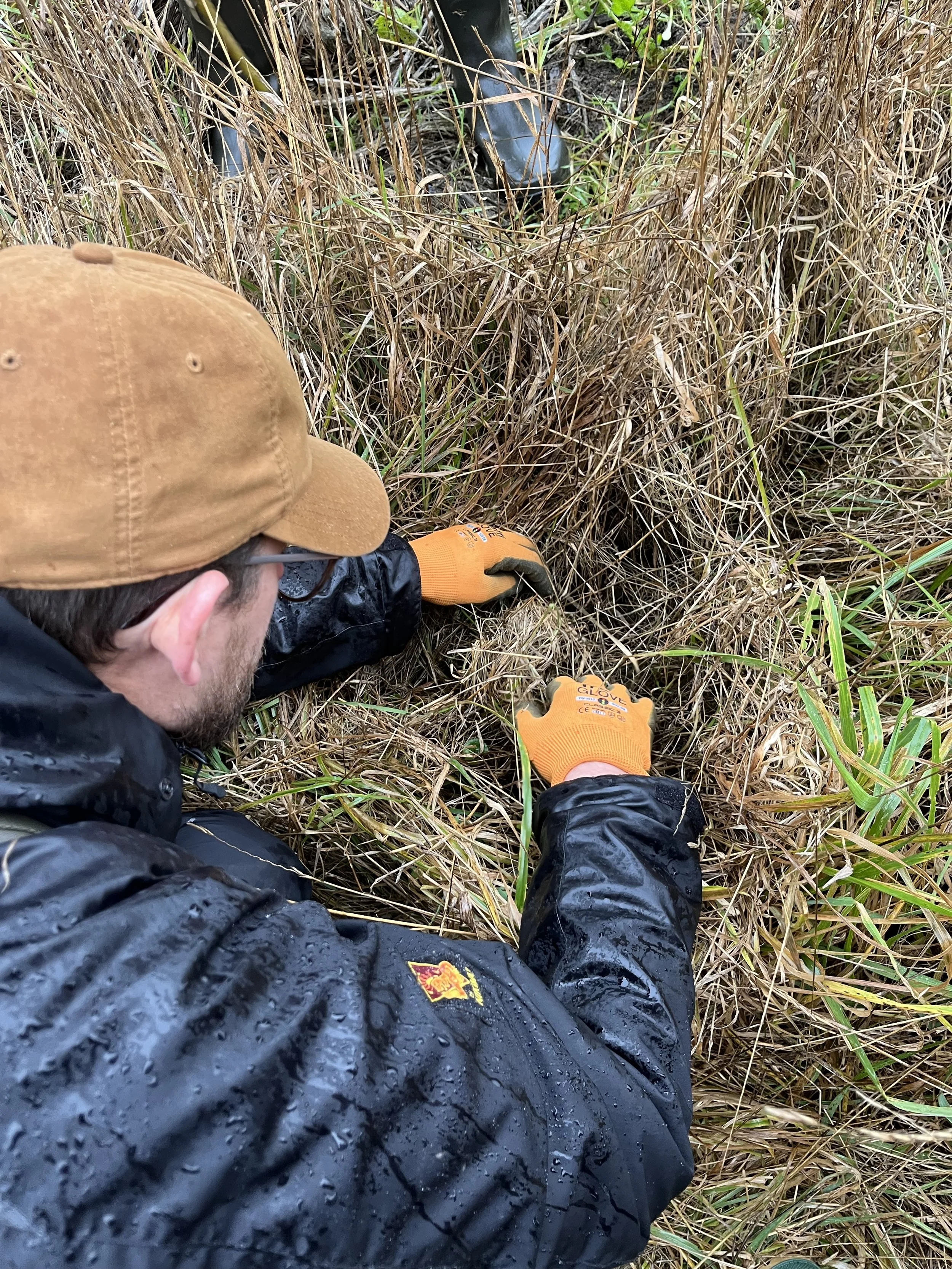
Simon showing off a harvest mouse nest.
Wider Benefits: Carbon, Nutrients, and Community
From an ecological perspective, these changes matter beyond the site boundaries too. Wetter soils and thicker vegetation can help hold carbon, keep nutrients on the land for longer and improve water quality. Just as importantly, these places give people the chance to connect with a landscape that feels more dynamic, more surprising and more alive. Recovery here is not only about species coming back, but about rebuilding healthier relationships between land, water and community.
Wilder Reflection
What stayed with me as I moved between the Somerset Wildlands sites is the contrast between the wider Levels and Moors - so much of it still shaped by drainage, grazing and agricultural improvement. As such, these smaller places where nature is starting to loosen the grip a little are of real importance. At Clark Fields, that change still feels light and open, visible in the first signs of flower-rich grassland. Further along the sequence, the vegetation will grow taller, wetter and more varied in structure. In comparison, at Waste Drove the land feels dense, the sward tangled and complex and unmistakably wilder. Seeing those stages side by side makes rewilding feel very real: not a sudden transformation, but a gradual unfurling into something richer and more alive.
Personally, I find these places full of hope. Even now, while they are still emerging, they already feel like sanctuaries: places where water lingers, vegetation gathers complexity and wildlife is given room to return. What excites me most is the thought that these small stepping stones could one day connect into a much broader corridor of wild land across Somerset. If that happens, species will have more room to move and recolonise, and the quieter, less noticed life of wet places may return in greater abundance. For me, that is what makes this work so exciting - small beginnings, but the potential for something much bigger.